Public Transport in Amsterdam: Tickets, Passes & How to Pay (2026)
See prices From 10 EUR · Free cancellation available
Contents
How does public transport in Amsterdam actually work?
Public transport Amsterdam runs on one integrated network operated mainly by GVB: trams, the metro, city buses and the free harbor ferries all use the same tap in, tap out payment system, so once you understand one mode you understand nearly all of them. Visitors pay either with a GVB paper or digital day ticket for unlimited rides, or per journey using a contactless bank card or OV-chipkaart through the national OVpay system. This guide walks through the whole network, how to pay, and which ticket actually fits your stay length, so you are not guessing at a tram door on day one.
Check prices & dates
Ready to visit?
Book your tickets in advance: popular time slots sell out.
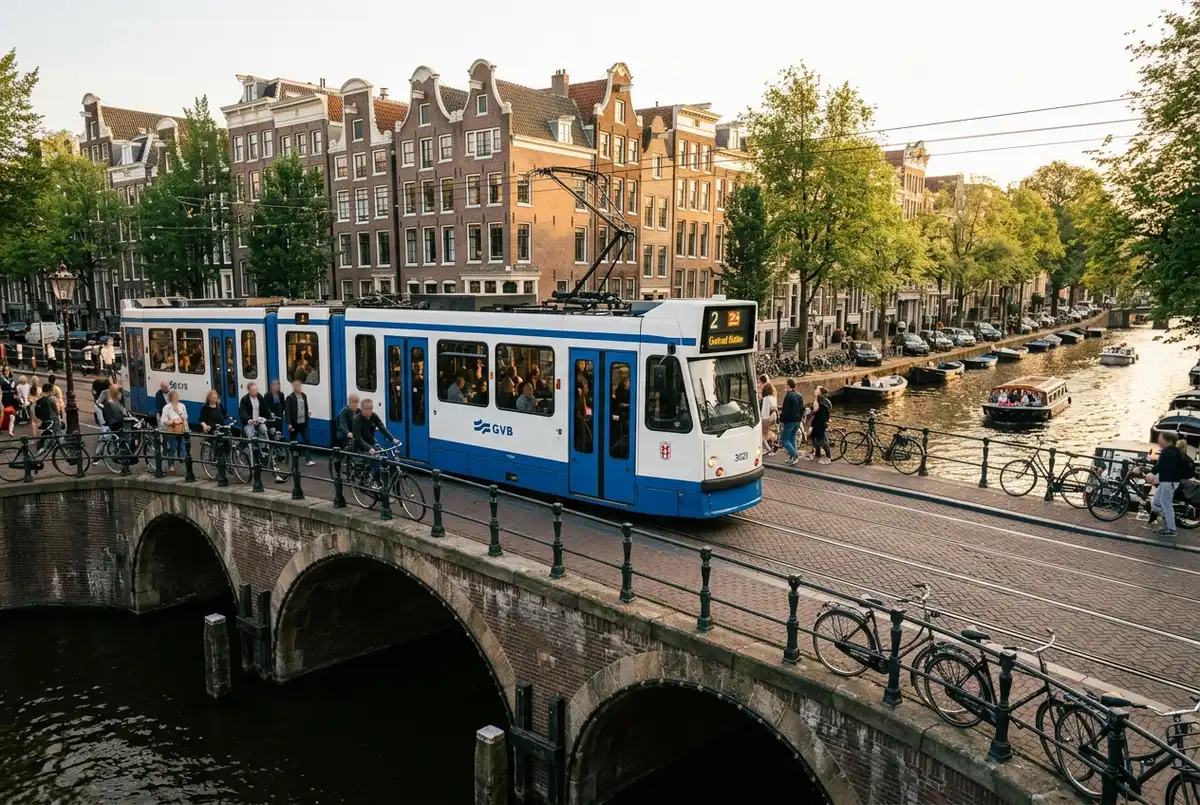
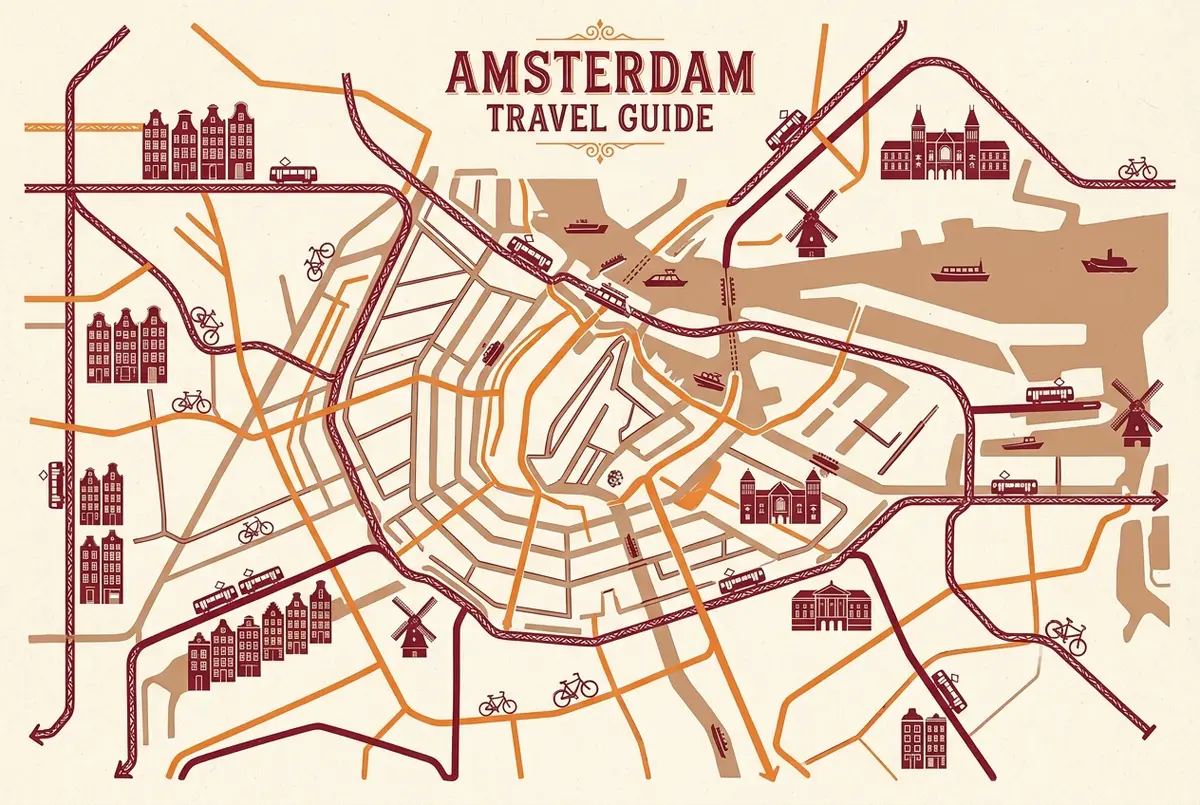
GVB is Amsterdam’s municipal transport operator, running four things a visitor will actually use: the tram network that laces the historic center and reaches most museums and neighborhoods, four metro lines including the North South line that crosses under the IJ in about seven minutes, a dense city and night bus network that fills the gaps trams do not reach, and the free ferries behind Central Station that cross the IJ to the EYE Film Museum and the NDSM wharf. Trams are the workhorse for most sightseeing days, since the tram map overlaps heavily with the museum district, Dam Square, and the canal ring, while the metro wins for longer hops like Central Station to De Pijp or the southern business district.
How do you actually pay for a tram in Amsterdam?
There are two separate ways to pay, and mixing them up is the single most common visitor confusion. The first is a GVB day ticket, paper or digital, bought in advance and valid for unlimited rides across one to seven days with no need to check out. The second is pay per journey through OVpay, the national contactless system: tap your contactless bank card or an OV-chipkaart on the reader when boarding and again when leaving every single vehicle, and the system calculates a distance based fare between those two taps. Forget to tap out and the system charges a maximum default fare as a penalty, which is the single costliest mistake a first time rider makes. → See current availability
GVB day tickets versus pay per journey OVpay, compared
Payment method
How it works
Best for
GVB day ticket (1 to 7 days)
Flat price, unlimited rides, no tap out needed for fare calculation
Visitors riding three or more times a day
OVpay contactless bank card
Tap in and out every ride, distance based fare, roughly EUR 3.40 per short single
Visitors taking one or two short rides total
OV-chipkaart
Same tap in, tap out distance fare as OVpay, needs preloaded credit
Longer stays or locals, less convenient for a short visit
I amsterdam City Card
Unlimited GVB included in the card price, no separate payment at all
Anyone already holding the card for museums
For nearly every sightseeing itinerary that plans three or more rides in a day, a flat day ticket beats paying per journey, since the flat price stops mattering once you have ridden enough to clear it.
What actually happens if you forget to check out?
OVpay and OV-chipkaart both calculate fares on a check in, check out basis, and the system has no way of knowing your real destination if you never tap out, so it defaults to charging the maximum possible fare for that trip as a safeguard against fare dodging. That default charge is refundable in some cases through the OVpay website if you genuinely forgot, but the refund process takes time and is not guaranteed, so the safer habit is simply building the tap out step into your routine from the first ride, the same way you would remember your hotel key. Group travel makes this worse, not better, since every rider taps in and out individually, so a family of four forgetting to tap out means four separate maximum fare charges rather than one.
Which ticket matches your stay length?
Match the ticket to how many active sightseeing days you actually have, not to your total trip length. A single day with a handful of rides fits a 1 day GVB ticket. A weekend or short break with steady daily tram use fits the 2 to 4 day tiers, where the per day cost drops noticeably against buying single day tickets back to back. A longer week long stay with daily riding fits the 7 day tier, the cheapest per day rate GVB sells on its own. And any visitor already holding the I amsterdam City Card should buy no separate transport ticket at all, since the card already includes unlimited GVB travel for its full validity window. Our GVB tickets guide breaks down the exact price ladder across every duration.
Does the I amsterdam City Card already include public transport?
Yes, and this is the detail that saves City Card holders real money if they know it in advance. The I amsterdam City Card bundles unlimited GVB trams, buses, metros and ferries into the same price as its 70 plus free museums, worth roughly EUR 10 a day if bought separately. Anyone holding the card should skip a GVB ticket entirely, since buying both means paying twice for the same rides. Our worth it verdict runs the full break even math for the card across museums and transport together.
Does GVB cover the airport train?
No, and this is the gap that catches more visitors than any other. GVB covers city transport only: trams, metros, buses and the free ferries. The main airport train between Schiphol and Amsterdam Central Station runs on the national NS rail network, a completely separate ticket, as do most regional buses run by Connexxion, Arriva and EBS. Landing at Schiphol and heading straight into the city needs either a standalone train ticket or a bundled option like the Amsterdam Travel Ticket, which combines the airport legs with full GVB coverage in one product. Our Schiphol to Amsterdam guide walks through the train, the express bus 397 and the taxi option side by side with current prices and travel times.
How do the tram and metro fares actually compare?
Single fares hover around EUR 3.40 regardless of whether you ride a tram three stops or take the metro across the city, since GVB prices city journeys on a simple system rather than a complex zone map. That flat feeling fare makes single rides fine for a one off trip, but it adds up fast across a full sightseeing day, which is exactly why the day tickets exist. Night buses run the same fare structure after the trams stop around midnight, so a late canal walk home stays optional rather than necessary. Our tram and metro tickets guide covers the full single fare and day ticket pricing table in more detail.
Is Amsterdam’s public transport accessible for reduced mobility?
Coverage is genuinely good by international standards, though not universal across the oldest parts of the network. Most metro stations offer step free access with elevators, and the newer tram fleet running on the busiest lines is low floor with a boarding ramp that the driver can extend at a request, though a handful of older tram models and some historic center stops still involve a step up. Buses across the network are low floor as standard. Travelers who need guaranteed step free routes should check GVB’s own accessibility information for the specific lines they plan to use, since coverage varies more by vehicle type and stop than by area of the city.
How does Amsterdam’s system compare with other major European cities?
Visitors arriving from London, Paris or Berlin generally find Amsterdam’s network simpler to learn, mostly because the compact center concentrates so many destinations within a small handful of tram lines rather than a sprawling multi line metro map. There is no zone based pricing puzzle to solve either, unlike London’s fare zones, since GVB day tickets charge one flat price regardless of how far you travel within the city. The tradeoff is a smaller metro network than those larger capitals, since Amsterdam leans on trams and buses for most short distance travel rather than running trains under every neighborhood, which is exactly why a comfortable pair of shoes still matters even with an unlimited ticket in hand. → Check dates and prices
What about day trips outside the city?
GVB tickets stop working the moment you leave the city limits, so a trip to Zaanse Schans, Haarlem, Volendam or Keukenhof needs a different product covering regional trains and buses. The Amsterdam and Region Travel Ticket extends coverage to these regional routes in one bundle, and it pairs naturally with the City Card’s own region perks, including free entry at the Zaans Museum near Zaanse Schans. Our day trips from Amsterdam by train guide has the per destination breakdown, including which ticket unlocks which trip.
How does GVB compare with the bundled travel pass options?
Three different travel pass products stack differently against a plain GVB ticket, and picking the wrong one is an easy way to overpay. A plain GVB ticket suits visitors who already have a museum pass with no transport included, since it fills exactly that gap. A bundled travel pass that adds the airport train and regional trips on top of GVB suits visitors who want one product covering everything from landing to day trips. Our Amsterdam travel pass comparison lines up GVB against the bundled airport and region options with a real price and coverage table, so you can see the exact tradeoff before buying either.
How does public transport fit into the wider Amsterdam pass landscape?
Transport is one piece of a bigger decision most visitors face: which single pass, if any, should cover the whole trip. Our Amsterdam pass comparison lines up every major card and ticket product side by side, transport included or not, so you can see at a glance which one actually earns its price for your specific plans. If museums matter as much as trams to your trip, that comparison table is worth reading before locking in any single transport ticket on its own.
Can tourists buy a GVB ticket without a Dutch bank card?
Yes. Visitors do not need a Dutch bank account or an OV-chipkaart to use the network, since GVB day tickets are sold online in advance through international booking platforms and load onto a phone as a digital ticket, and OVpay was specifically built to accept ordinary international contactless debit and credit cards at the same readers locals use. The one habit worth building early is checking which physical card you tapped in with, since tapping in on one card and trying to tap out on a different one, a common slip when switching between a wallet and a phone case, confuses the fare calculation and can trigger the maximum fare charge described above.
How far in advance should you plan your transport ticket?
Unlike museum timeslots, transport tickets rarely need advance booking for availability, since GVB does not sell out capacity the way a popular museum can sell out entry slots. The reason to buy ahead is convenience rather than scarcity: loading a digital ticket before you land means your first tram ride from the airport or hotel area can start the moment you step outside, without hunting for a ticket machine or app download on unfamiliar mobile data. Buying the moment you land works too, it simply costs a few minutes you could otherwise spend sightseeing.
What are the most common mistakes first time riders make?
Three mistakes account for most of the confusion visitors run into. Forgetting to tap out on an OVpay journey triggers a maximum fare charge, sometimes several times the fare the actual ride should have cost. Buying single fares for a day with three or more planned rides usually costs more in total than a single flat day ticket bought upfront. And buying a separate GVB ticket while also holding an I amsterdam City Card wastes money outright, since the card already includes unlimited transport. Avoid those three and the network is genuinely simple to use, even for a first time visitor who has never ridden a European tram before.
Does the network run late at night and early in the morning?
Trams and the metro typically start service in the early morning and wind down around midnight, after which the dedicated night bus network, marked with an N prefix on the route number, takes over from Central Station along the busiest corridors until the day network restarts. Night buses run less frequently than daytime trams, often on a scheduled interval rather than a constant flow, so checking the timetable before a late departure saves a long wait at an empty stop. Every ticket type covered in this guide, day tickets, OVpay and the I amsterdam City Card alike, covers the night network at no extra cost, so a late canal side dinner never has to end with an expensive taxi back to the hotel.
What is the honest bottom line on Amsterdam public transport?
For a short sightseeing trip riding three or more times a day, a GVB day ticket or an I amsterdam City Card, if you already hold one for museums, beats paying per journey almost every time. For a light trip with only a ride or two total, OVpay contactless payment on a normal bank card is simpler than buying a ticket you barely use. And for any trip that includes the airport or a day trip beyond the city, plan a bundled travel pass rather than assuming GVB alone will cover the whole journey. The City Card Amsterdam homepage compares every transport option alongside every museum pass on the market in one table if you want the complete picture before booking anything.
How do I pay for the tram in Amsterdam?
Tap a contactless bank card or OV-chipkaart on the reader when boarding and again when leaving for a per journey fare, or buy a GVB day ticket in advance for unlimited rides with no tap out fare calculation needed.
Does the I amsterdam City Card include public transport?
Yes. Every duration of the card includes unlimited GVB trams, buses, metros and ferries, so card holders should not buy a separate transport ticket.
Does GVB cover the train from Schiphol Airport?
No. GVB covers city transport only. The airport train runs on the separate NS rail network, so pair a GVB ticket with a train single or a bundled Amsterdam Travel Ticket.
What is the average price of a single tram ride in Amsterdam?
Single fares hover around EUR 3.40 regardless of distance within the city, though a day ticket usually costs less once you plan three or more rides in a single day.
Do I need a ticket for the ferries behind Central Station?
No. The GVB ferries to EYE and NDSM are free for everyone, ticket or not, and remain one of the best free views in the city regardless of which transport product you hold.